 English
 Français
A rural electric association serves a large gas processing plant and needed to evaluate an alternate feed from its six-feeder substation. Our team performed the distribution study end to end:
- Validated the GIS and engineering models before analysis
- Performed power flow analysis on the existing and alternate feeds
- Performed fault analysis using the transmission provider's source models
- Developed time-current coordination for the affected feeders
Sixty Mountain validated the model first, so the results and recommendations stand on checked data.
MODEL VALIDATION
The association's GIS was compared against its WindMil engineering model. Conductor data, load allocation, and equipment records were spot-checked, and corrections were documented before the analysis.
POWER FLOW AND FAULT ANALYSIS
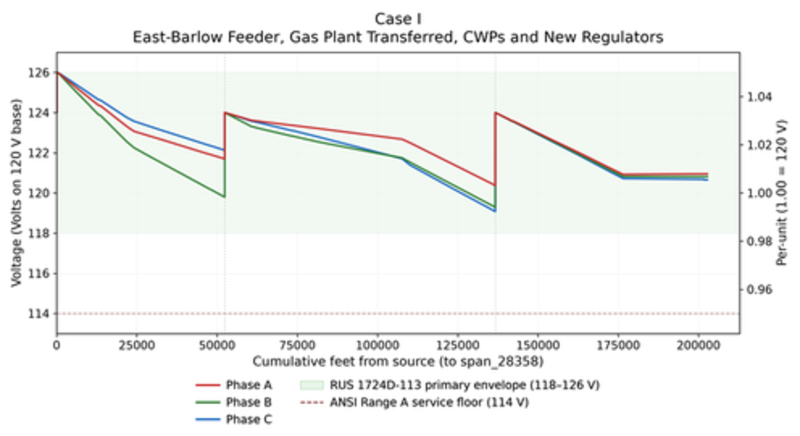
Existing and alternate feed configurations were analyzed for the plant load using work plan models and transmission source data. Voltage was checked along the full chain under each configuration.
PROTECTION COORDINATION
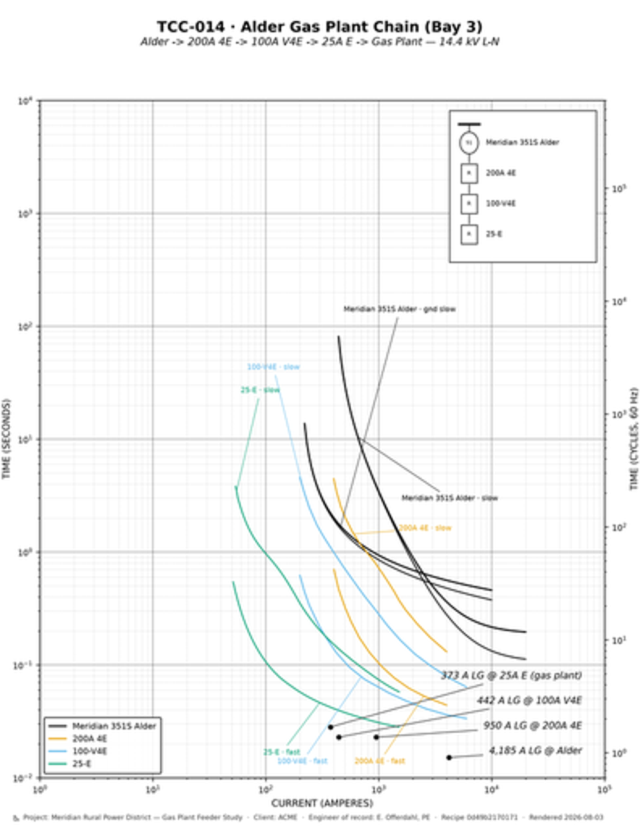
A complete time-current coordination library was developed for the affected feeders and evaluated under both feed arrangements.
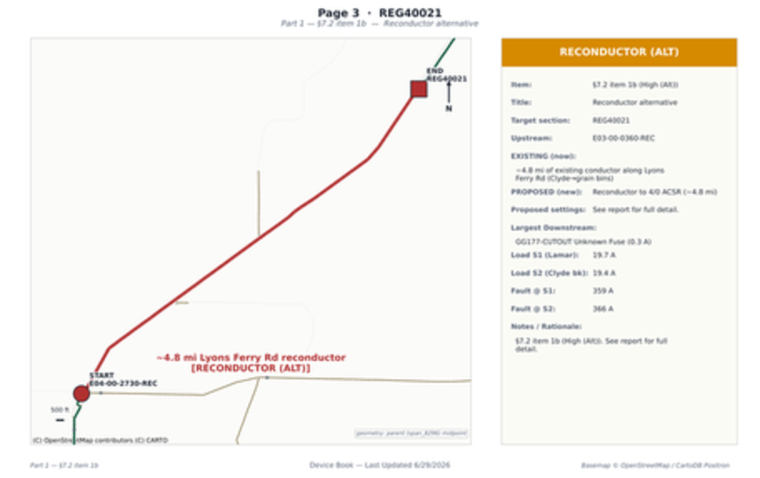
Recommendations were delivered as a device-by-device change book, with a map and specification card for each location.
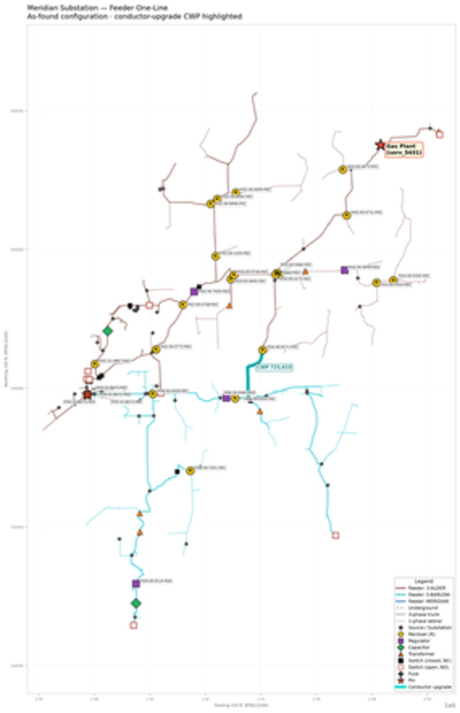
The study traced each feeder chain from the substation to the plant.
BOTTOM LINE
- An association needed to know the right way to feed its largest industrial load
- Our team delivered a validated study with findings and recommendations in a final report